




Evidence-informed practice

Using evidence to support thoughtful decision-making, shared learning and improvement across schools.

Evidence plays an important role in how we work with schools. It helps us ask better questions, reflect on practice and make more informed decisions together.

Smiling young person with curly hair wearing a dark sweater and white collared shirt in a classroom setting with a blurry whiteboard in the background.
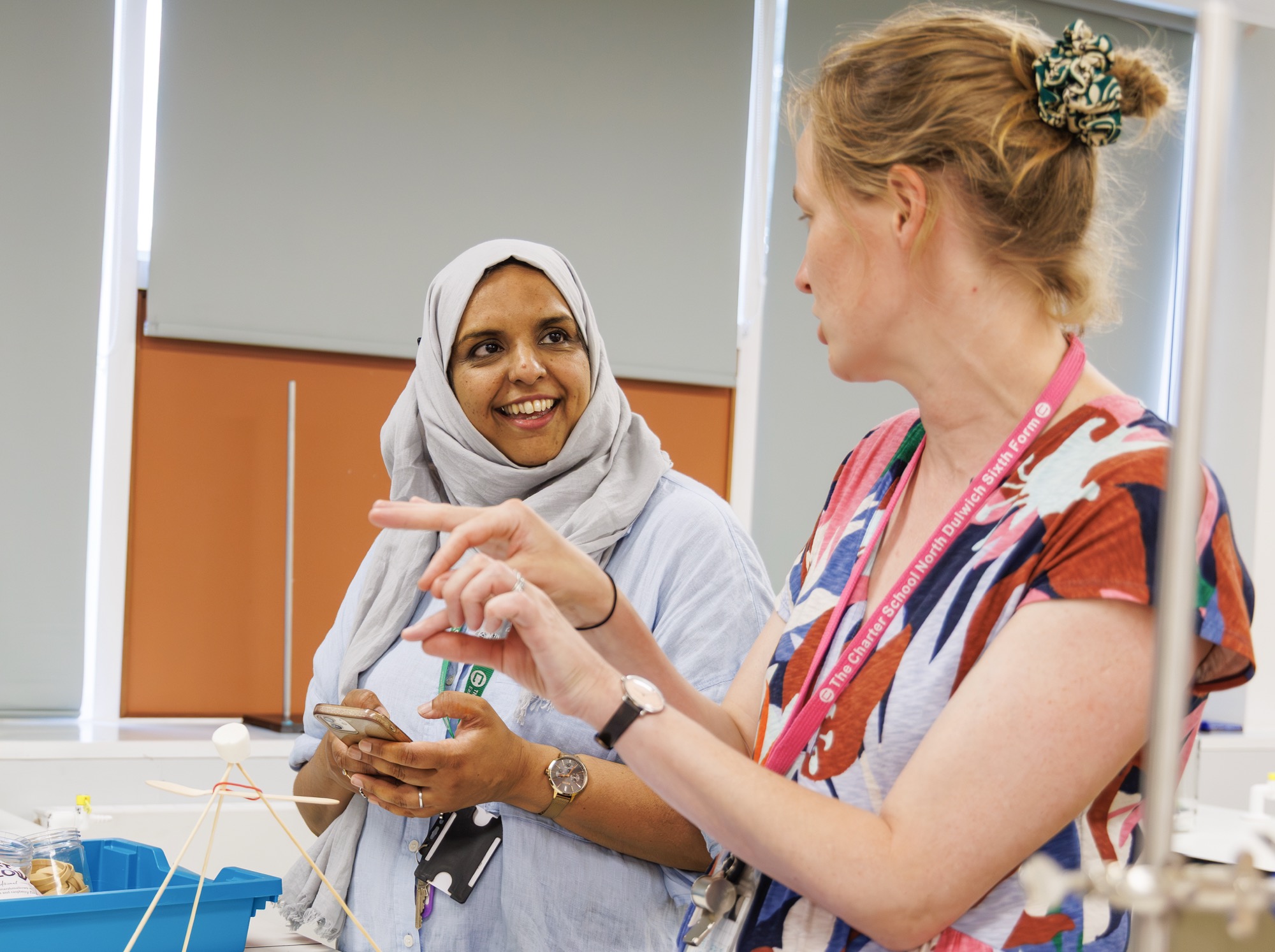
Two women engaged in conversation in a classroom setting; one is wearing a light gray hijab and holding a smartphone, while the other wears a colorful shirt with a pink lanyard that reads 'The Charter School North Dulwich Sixth Form,' gesturing with her hands.
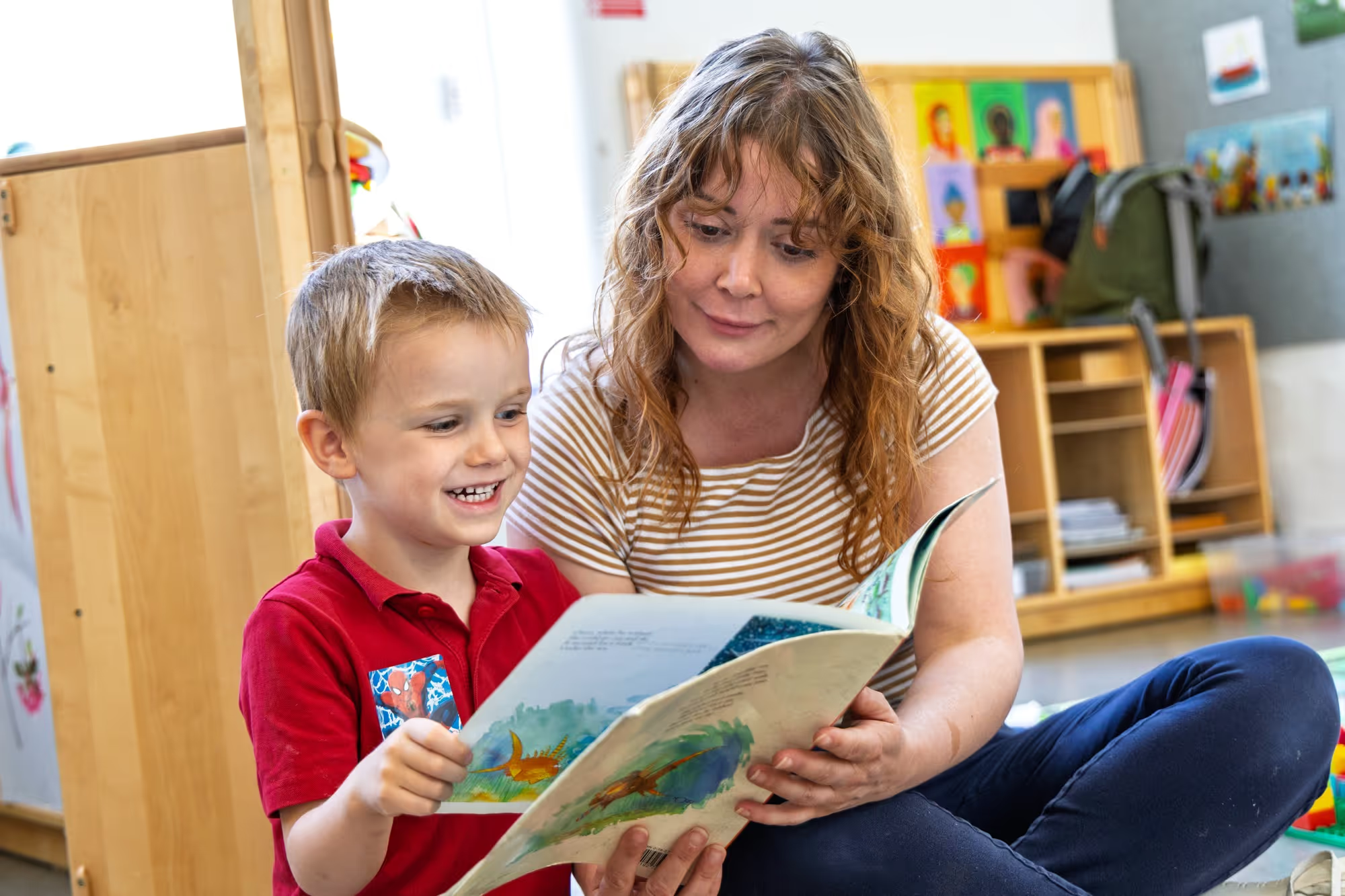
A woman with curly hair in a striped shirt sits with a smiling young boy in a red shirt, reading a colorful children's book together in a bright playroom with shelves and toys.
A man wearing a white T-shirt and pink lanyard is explaining something to two people sitting across a table, pointing at a laptop screen with text, in a room with blue curtains and other people working in the background.
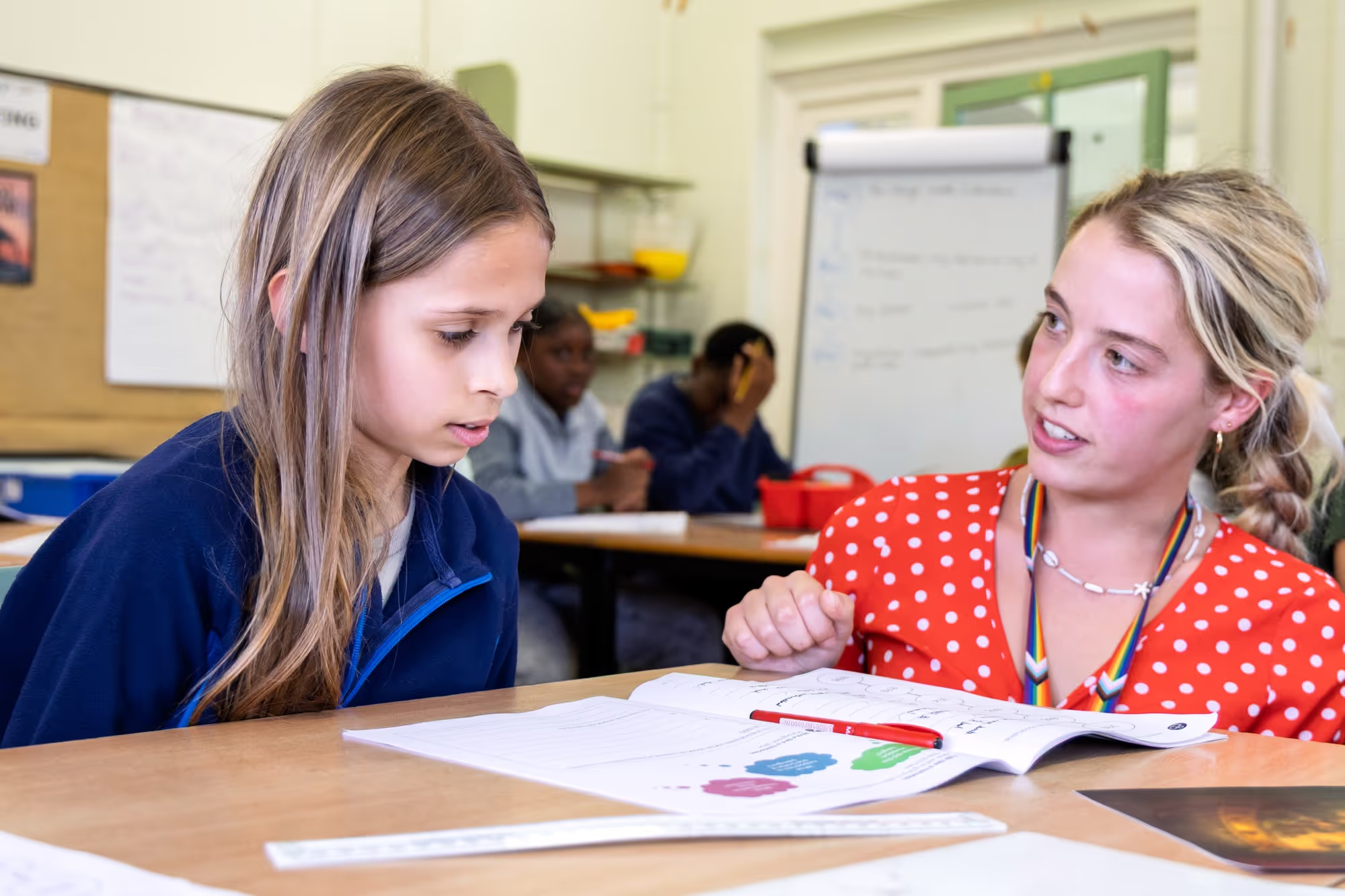
Young girl with long hair looking at an open workbook while a woman in a red polka-dot shirt explains something beside her in a classroom setting.
A diverse group of adults engaged in animated conversation while seated on pink chairs in a brightly lit room, with one woman in a blue shirt gesturing as she speaks.
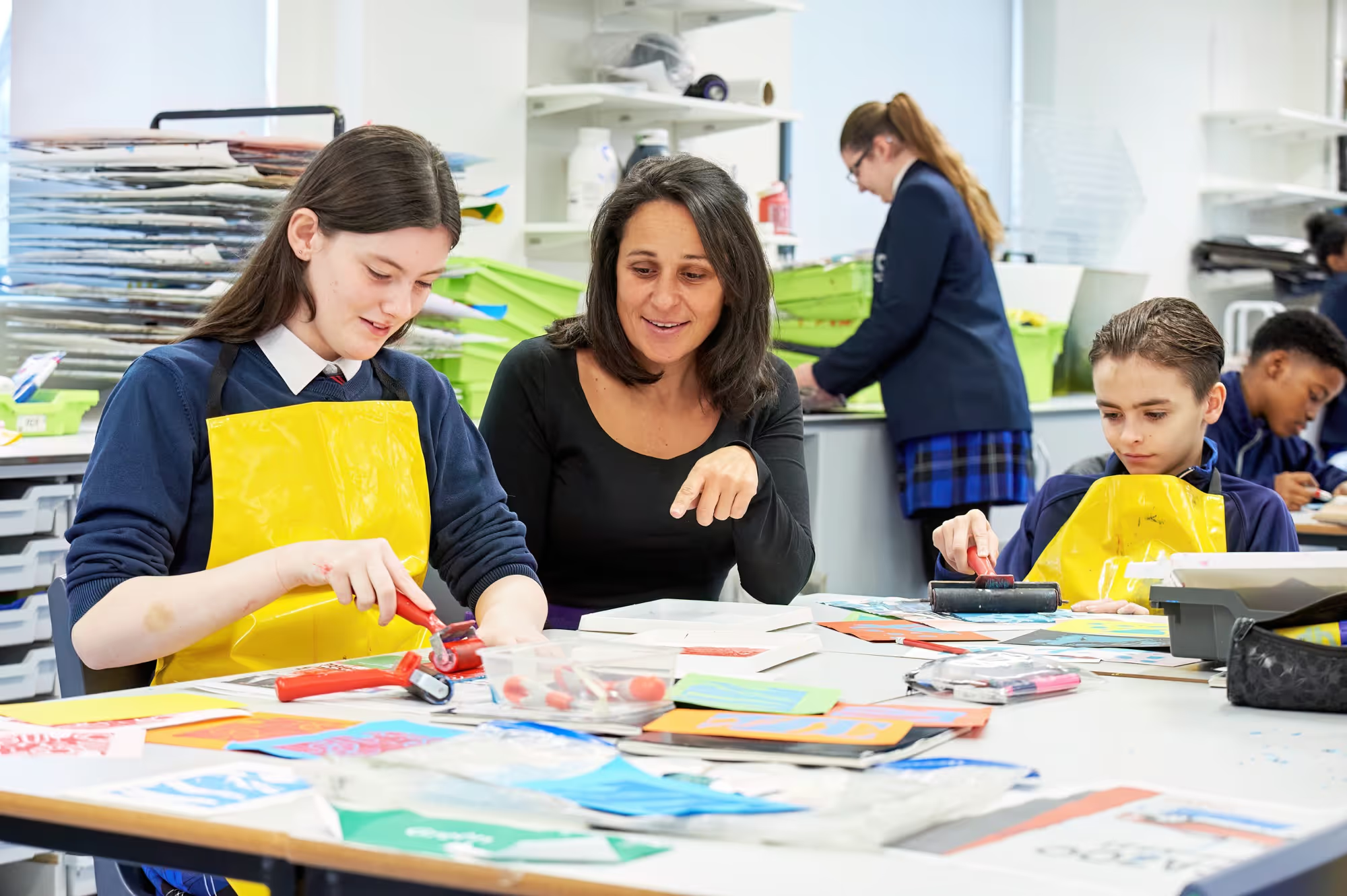
A teacher guides two children painting on paper in a bright classroom with art supplies and other students working in the background.

Why evidence matters to us.

It helps us make thoughtful decisions, not follow fixed answers.

It brings research, professional judgement and local knowledge together.

It supports learning and improvement across different contexts.

How evidence informs our work

A shared way of thinking that supports professional judgement and collaboration.

Our approach to evidence is shaped by a small number of shared principles.

Two children, a girl and a boy, sitting at a table in a classroom smiling and interacting while working with colorful geometric shapes and pencils.
Smiling child with braided hair wearing a green sweater and white collared shirt outdoors with green foliage in the background.
A young person with blonde hair and green eyes wearing a red shirt holds up and examines a strip of photographic film in a well-lit room with colorful blurred background.
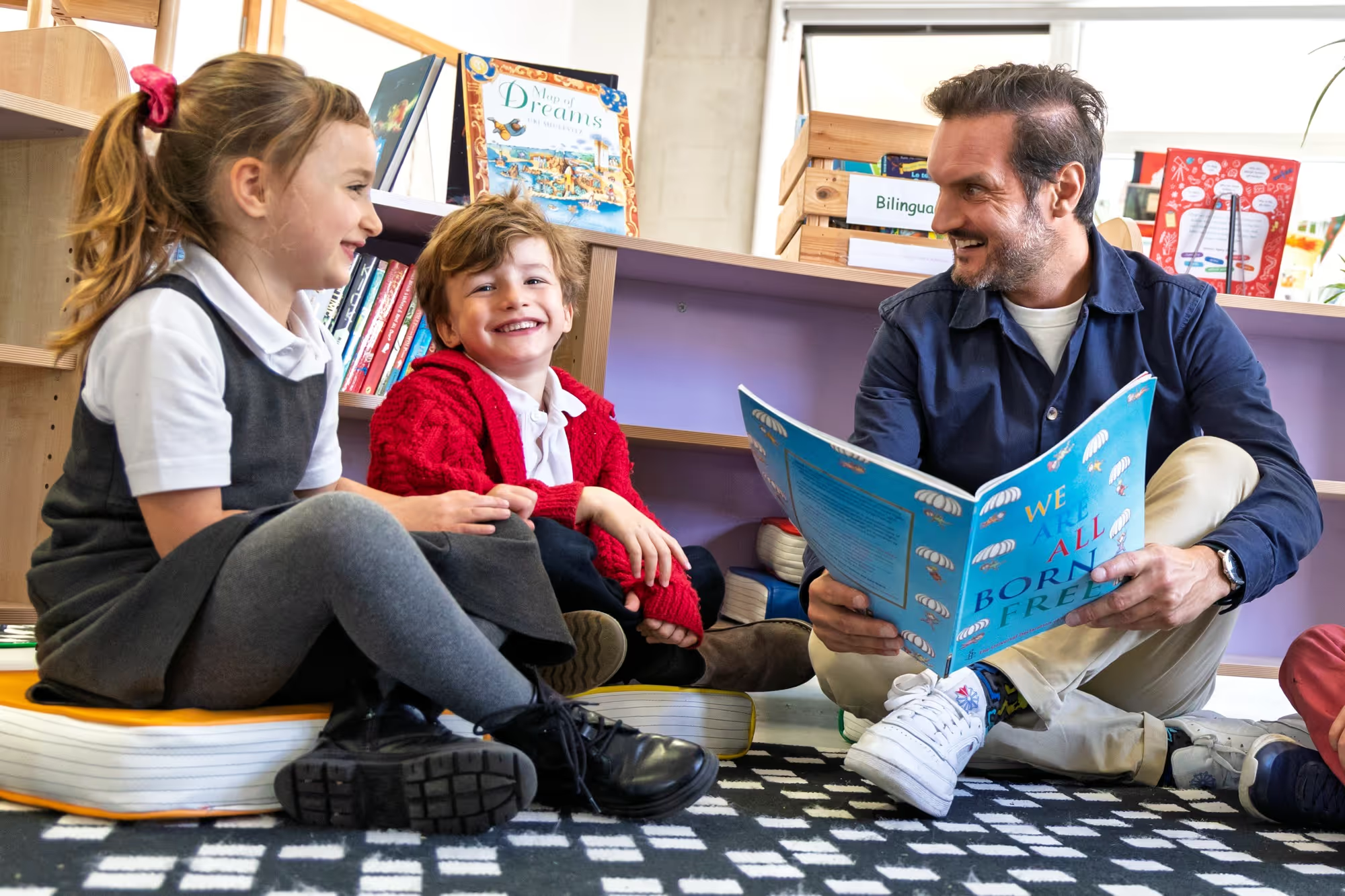
A man sitting on the floor reading a book titled 'We All Born Free' to two smiling children sitting on cushions in a cozy classroom area with bookshelves in the background.

Guided by the evidence

Evidence informs, it does not dictate

Research helps guide thinking and decision-making, but it never replaces professional judgement or local expertise.

Rooted in our schools

Context matters

What works in one school may need to be adapted in another. Evidence is always considered alongside the needs of pupils, staff and communities.

Meaningful collaboration

Learning happens together

We use evidence to support professional dialogue, shared reflection and collaborative learning across schools.

Trust the evidence

Practice develops over time

Improvement is rarely immediate. Evidence helps schools test ideas, reflect on impact and refine practice sustainably.

Leading the conversation

We are a regional hub for evidence & improvement

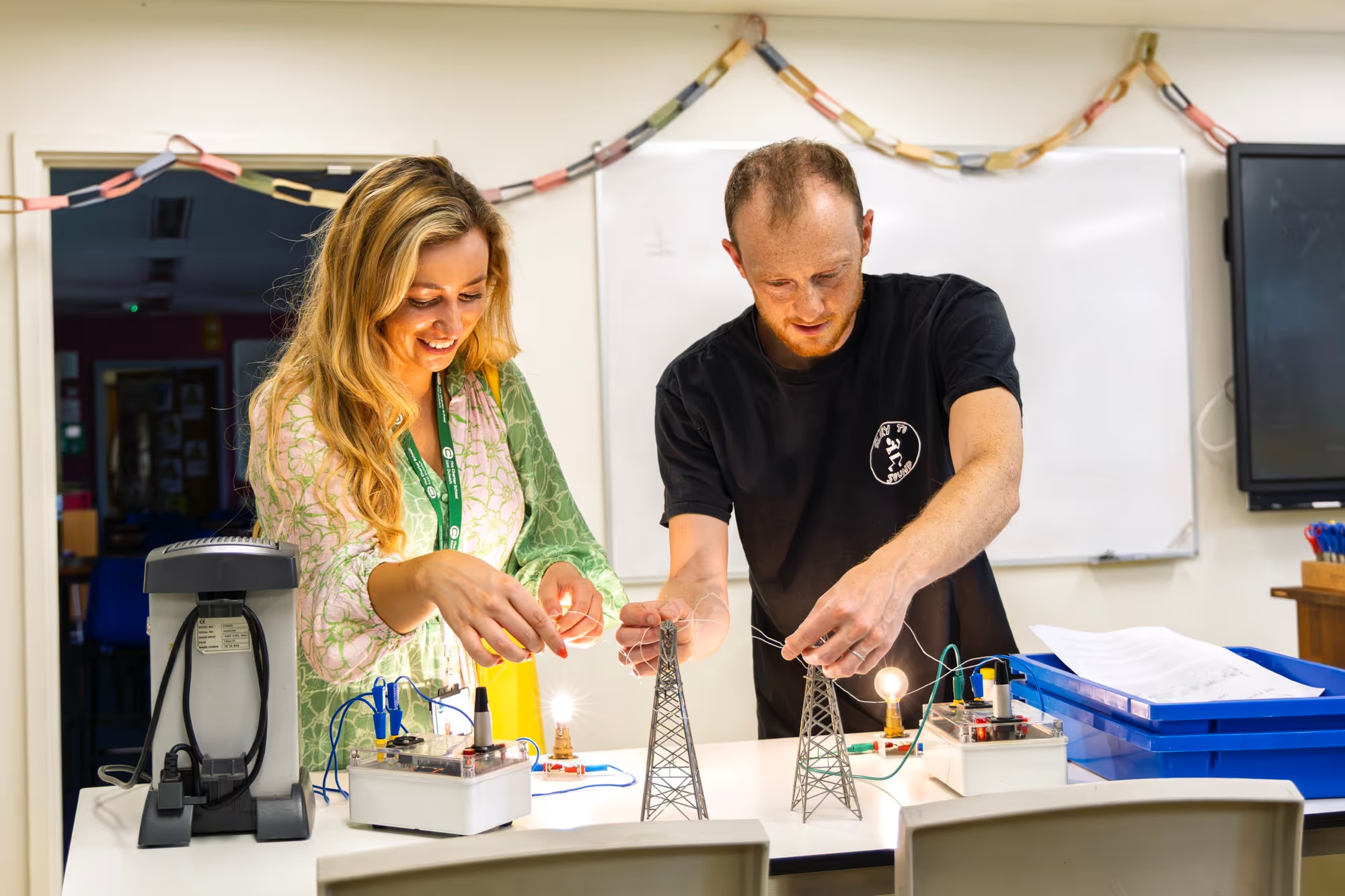
Two people, a smiling woman in a green patterned shirt and a man in a black t-shirt, work together on an electrical circuit experiment with small lit bulbs and metal towers on a white table in a classroom.

The Charter Trust is home to London South Research School, one of only 33 accredited Research Schools in England, recognised by the Education Endowment Foundation (EEF) for championing evidence-informed practice.  

The Research School supports schools in South London and beyond to explore, interpret and apply research in practical, school-facing ways.

120+

Schools engaged with our curriculum

103+

Schools engaged with the Research School

Better futures for children and young people

What this looks like in practice

Evidence-informed practice shapes how we work with schools, supporting curriculum development, inclusion and professional learning. It runs through our work and underpins how we collaborate and learn together.

Guided by what works best

How schools like yours can engage with evidence-informed work

Schools engage with evidence-informed practice in different ways, depending on their priorities and starting points.

Using practical resources

Schools can access research-informed resources and guidance that support classroom practice and professional learning.

Learning together

Teachers and leaders take part in professional learning, networks and shared reflection that explore evidence in meaningful, school-facing ways.

Working collaboratively

Some schools choose to work more closely on shared priorities or projects, contributing to learning that is shared more widely across the network.

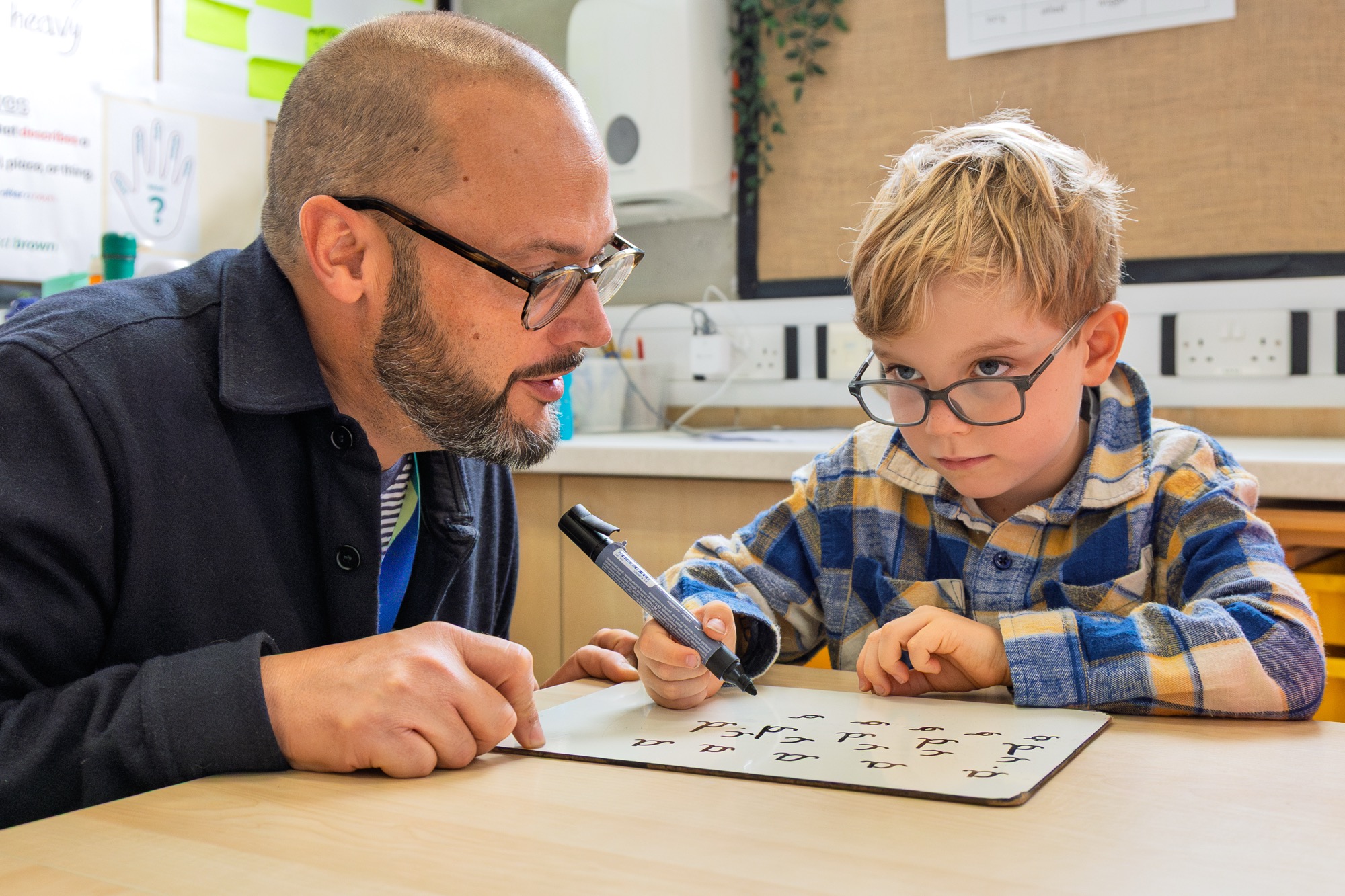
A young boy wearing glasses and a plaid shirt practices writing on a whiteboard while a man with glasses and a beard attentively watches and guides him in a classroom setting.

Interested in adopting an evidence-informed

approach in your school?